


- 1. Hair Transplantation
- 2. What Is Hair Transplantation?
- 3. Pre-Transplantation Evaluation
- 4. How Is Hair Transplantation Performed?
- 5. Hair Transplantation Methods
- 6. After Hair Transplantation
- 7. Temporary Hair Shedding After Hair Transplantation
- 8. Hair Transplantation in Women
- 9. Is Hair Transplantation Safe?
- 10. When Do the Results of Hair Transplantation Become Visible?
- 11. Frequently Asked Questions About Hair Transplantation
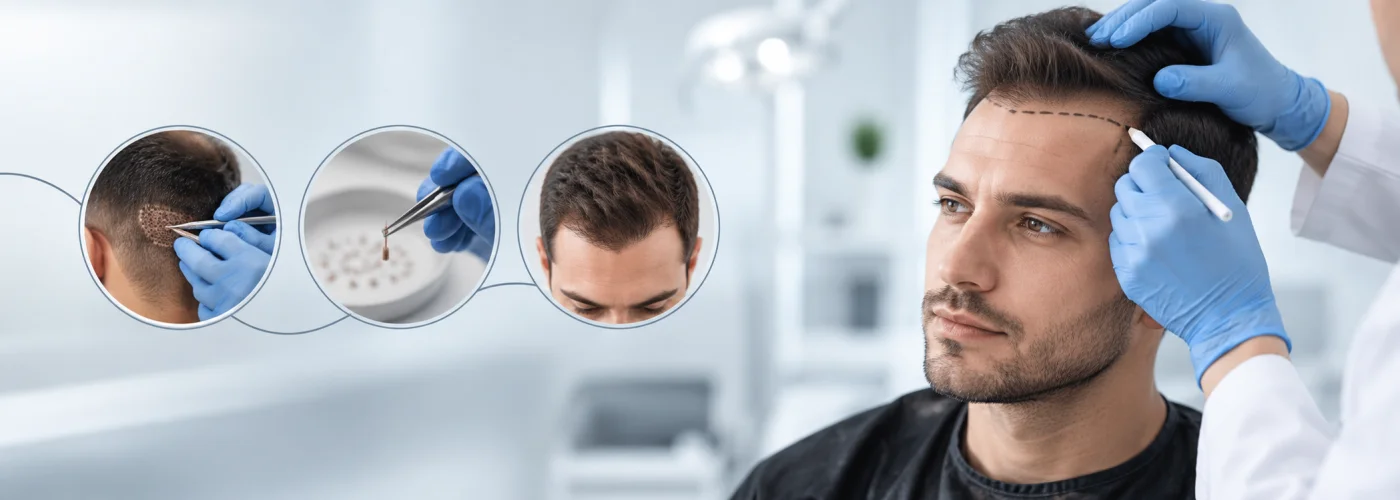
Hair Transplantation
Hair loss is a common condition that may lead to a decrease in hair density over time and changes in a person's appearance. Genetic factors, hormonal changes, age, stress, and various health problems may be among the causes of hair loss.
Private Algomed Hospital Hair Transplantation Unit aims to carry out the hair transplantation process through personalized planning by evaluating the needs of individuals experiencing hair loss and hair thinning.
The main goal of hair transplantation is to achieve a natural-looking hair appearance that is compatible with the person's facial features by taking into account their existing hair structure, donor area characteristics, and pattern of hair loss.
What Is Hair Transplantation?
Hair transplantation is a procedure in which areas that have lost hair density due to hair loss or thinning are restored using the person's own healthy hair follicles.
During the procedure, hair follicles from the nape area, which is generally more resistant to hair loss, are usually used. The extracted hair follicles are placed in the prepared area for bald or thinning regions according to the planned angle and direction.
For a successful and natural-looking result in hair transplantation, it is important to consider not only the transplantation of grafts but also the hairline, direction of implantation, hair density, and existing hair structure as a whole.
Who Can Have Hair Transplantation?
Hair transplantation can be performed on individuals experiencing hair loss or thinning who have a sufficient number of healthy hair follicles in the donor area.
In particular:
Individuals experiencing hair loss due to genetic factors,
Individuals with male-pattern hair loss,
Individuals with a significant decrease in hair density,
Individuals with hair loss due to trauma, burns, or scars,
Individuals experiencing a receding hairline,
Individuals with localized hair loss in specific areas
may be evaluated for hair transplantation.
However, suitability for hair transplantation is not determined solely by the severity of hair loss. The cause of hair loss, donor area density, hair and skin structure, general health status, and the individual's expectations are evaluated before making a decision.
Pre-Transplantation Evaluation
The first stage of the hair transplantation process consists of a detailed evaluation and planning.
During the evaluation at Private Algomed Hospital:
- Type and severity of hair loss,
- Hair follicle density in the donor area,
- General condition of the hair and scalp,
- Existing hairline,
- Characteristics of the area planned for transplantation,
- Individual's expectations and needs
are taken into consideration to create a personalized treatment plan.
If deemed necessary, additional evaluations regarding the individual's health status may also be performed.
How Is Hair Transplantation Performed?
Hair transplantation may consist of different stages depending on the planned area and the technique to be used.
In general, the process proceeds as follows:
1. Examination and planning
Hair loss is evaluated, the donor area is examined, and the area to be transplanted is determined.
2. Hairline planning
A hairline suitable for a natural appearance is planned by taking into account the individual's facial structure and existing hair characteristics.
3. Anesthesia
The area to be treated is numbed with local anesthesia. Sedation may also be used when deemed appropriate.
4. Extraction of grafts
The required hair follicles are extracted from the donor area according to the determined technique.
5. Preparation of the transplantation area
The area where the hair follicles will be placed is prepared according to the planned direction and angle of the hair.
6. Placement of grafts
The prepared hair follicles are placed in the transplantation area according to the predetermined plan.
7. Post-procedure care
After the procedure is completed, the patient is informed about post-hair transplantation care and the precautions that should be taken.
The duration of the procedure may vary depending on the size of the area to be transplanted, the number of grafts required, and the technique used.
Hair Transplantation Methods
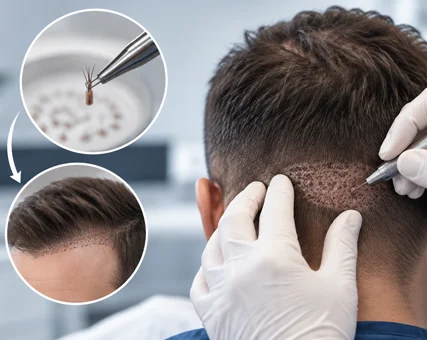
Since the follicles are extracted individually, a conventional linear suture line is not formed in the donor area. Proper planning of the procedure and correct placement of the grafts are important for achieving a natural appearance.

The suitability of the DHI method is evaluated according to the individual's hair and scalp characteristics and the condition of the area to be transplanted.
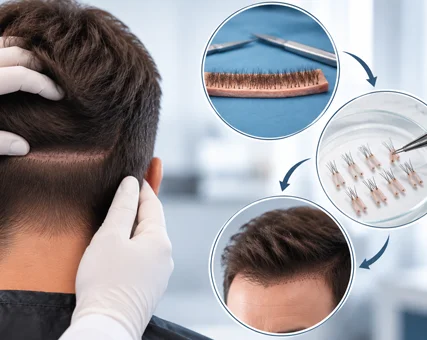
The method selected may not be the same for every patient. The technique to be used is determined according to the individual's needs and suitability.
After Hair Transplantation
After hair transplantation, redness, tenderness, mild swelling, or scabbing may occur in the transplanted area. These symptoms may vary from person to person.
During the recovery period:
- Following the care instructions recommended by the doctor,
- Avoiding unnecessary contact and pressure on the transplantation area,
- Limiting strenuous physical activities for a certain period,
- Using prescribed medications and care products regularly,
- Attending scheduled follow-up appointments
are important.
Scabbing may occur in the transplanted area during the first few weeks. Temporary shedding of some of the transplanted hairs may also occur. This may be part of the natural process following hair transplantation.
The emergence of new hair and the time at which results become more apparent vary from person to person. Hair growth continues over the course of several months, and evaluation of the final appearance generally requires a longer follow-up period.
Temporary Hair Shedding After Hair Transplantation
Temporary shedding of some transplanted hairs may occur following hair transplantation. This may be part of the process in which the hair follicles adapt to their new location.
While the hair follicles remain viable, the hair shafts may begin to grow again after a certain period. Therefore, the appearance during the first few months does not by itself indicate the final result of hair transplantation.
Hair Transplantation in Women
Hair loss is not a condition that affects only men. Women may also experience a decrease in hair density due to various causes.
When planning hair transplantation for women, the cause and pattern of hair loss, existing hair density, and condition of the donor area are evaluated in detail.
The method and treatment plan may differ for each patient.
Is Hair Transplantation Safe?
Since hair transplantation is a surgical procedure, it may involve certain risks, as with other medical procedures.
Temporary redness, swelling, tenderness, scabbing, or numbness may occur following the procedure. More rarely, complications such as infection, bleeding, scarring, or failure to achieve the expected hair growth may occur.
To reduce these risks, it is important that the procedure is performed under appropriate healthcare conditions, that the individual is properly evaluated before the procedure, and that post-operative care recommendations are followed.
When Do the Results of Hair Transplantation Become Visible?
Hair growth does not begin immediately after hair transplantation. Temporary shedding of transplanted hairs may occur during the initial period.
New hair growth begins in the following months, and hair density gradually increases over time. Although the results of hair transplantation vary according to individual characteristics, a period of 6–12 months may generally be required to evaluate the results.
